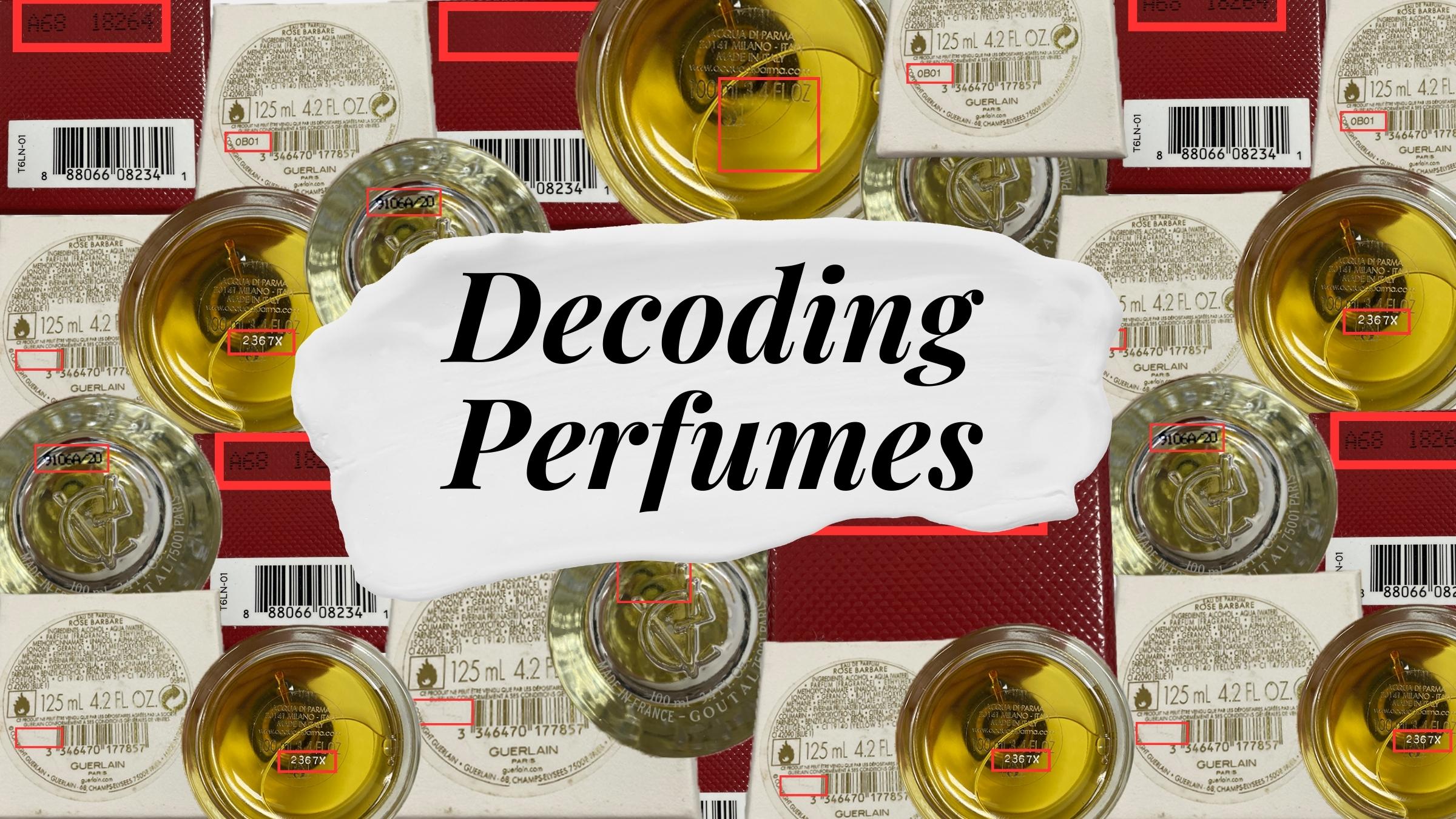
Many cosmetics products come with a batch code. This is no different for perfumes. When perfumes are ‘decoded’, this means one or more batch codes are removed from the bottle or packaging. Before we further explain what decoded perfumes are, let’s first understand the function of batch codes.
Batch codes in the cosmetics industry
Batch codes, as the name already implies, are meant to identify to which batch a perfume belongs to. This could for example refer to a production batch.
Production batch
A production batch code allows the producer or customer to trace down to which production batch a particular perfume bottle belongs. This could for example be useful to check whether or not a perfume bottle is expired or not.Also, in the event of a product safety issue, the producer can quickly identify to which resellers a specific batch is sold and request a recall. The manufacturer can sometimes even identify, which employee is responsible for it.
Other batch codes
Besides production batch codes, there may be other kinds of batch codes on perfumes and cosmetics. For example, the perfume brand may add codes, to identify to which country/region/reseller a certain product is sold. This can be useful if the brand owner wants to:
- Tailor a products to a specific region/country in order to comply with regulation or to simply make the product more attractive to certain local preferences.
- Make sure distributors don’t resell a fragrance to regions they’re not allowed to as according to the signed contract.
How are Batch Codes Applied
There are a variety of ways batch codes are applied. Most of the time it’s labelled or printed on the outside packaging. Below an example of a decoded label and box. In other cases it may be lasered or even carved on the packaging or bottle to make it harder or more expensive to decode fragrances. Below an example of a decoded perfume bottle.
Why Perfumes are Decoded
There are two main reasons why perfumes are sometimes decoded:
1. Selling fragrances in other regions
Perfume distributors often are only authorised by manufacturers to only resell perfumes in their own country or region. Some distributors may want to resell certain perfumes in other regions which they’re not authorised to do so. To make sure the manufacturer doesn’t find out, they may remove the batch code from the packaging. This practice is known as decoding perfume.
2. Selling fragrances below retail price
Moreover, distributors are often not authorised to sell fragrances below the retail price set by the manufacturer. However, if a distributor decodes a fragrance and supplies it to a reseller, the reseller will be able to sell the fragrance at below retail price.
Are Decoded Perfumes Original?
When a perfume is decoded, it doesn’t mean it’s not original. It only means the batch code is removed. In fact, the chance that a decoded perfume is fake, is near zero. After all, why should a distributor decode a perfume if it is fake anyways?We hope this article explained clearly what batch codes are and why sometimes perfumes are decoded. For any questions, feel free to leave a comment below.