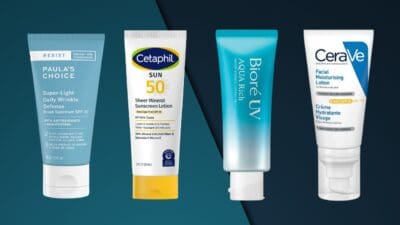

Sunscreen protects skin from ultraviolet (UV) radiation. UV radiation causes sunburn, hyperpigmentation, premature aging, and skin cancer.
Two main sunscreen types exist: mineral sunscreen and chemical sunscreen.
This guide explains how they work, their ingredients, safety concerns, and which sunscreen suits different skin types.
What Is the Difference Between Mineral and Chemical Sunscreen?
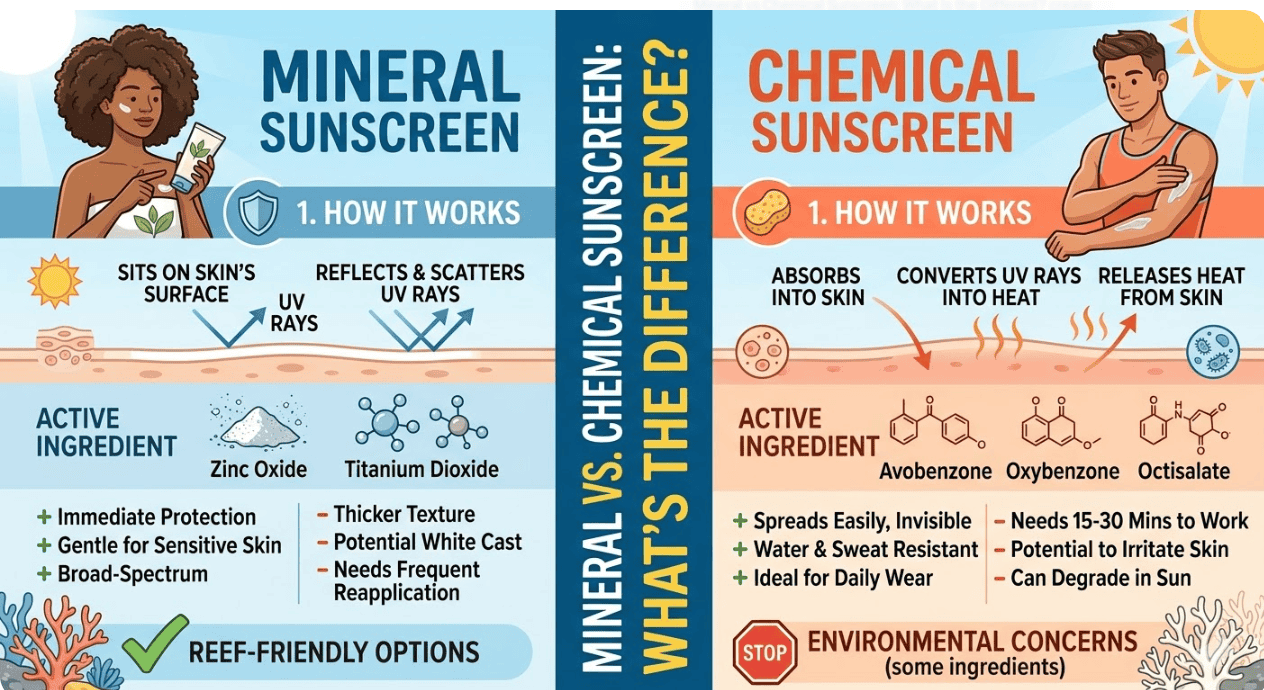
Mineral sunscreen reflects and scatters UV radiation, while chemical sunscreen absorbs UV radiation and converts it into heat.
| Feature | Mineral Sunscreen | Chemical Sunscreen |
|---|---|---|
| Protection mechanism | Reflects and scatters UV rays | Absorbs UV rays |
| Active ingredients | Zinc oxide, titanium dioxide | Avobenzone, octinoxate, oxybenzone, octocrylene |
| Skin penetration | Minimal | Some absorption possible |
| Time to activate | Works immediately | Requires ~15–20 minutes |
| Texture | Thicker | Lightweight |
Both sunscreen types provide broad-spectrum protection against UVA and UVB radiation when formulated correctly.
What Is Mineral Sunscreen?
Mineral sunscreen uses zinc oxide or titanium dioxide particles to protect skin by reflecting, scattering, and partially absorbing UV radiation.
Dermatologists frequently recommend mineral formulas for sensitive or reactive skin.
Key Mineral Sunscreen Ingredients
| Ingredient | Protection Coverage | Key Property |
|---|---|---|
| Zinc Oxide | UVA + UVB | Broadest UV protection |
| Titanium Dioxide | UVB + partial UVA | Stable mineral filter |
Benefits of Mineral Sunscreen
- Provides immediate protection after application
- Causes fewer allergic reactions
- Works well for rosacea, eczema, and post-treatment skin
- Often marketed as reef-friendly
Modern formulations reduce visible residue with micronized particles and tinted pigments.
What Is Chemical Sunscreen?
Chemical sunscreen uses organic molecules that absorb UV radiation and convert the energy into heat.
Manufacturers combine multiple filters to create broad-spectrum coverage.
Common Chemical UV Filters
| Ingredient | UV Protection |
|---|---|
| Avobenzone | UVA |
| Octinoxate | UVB |
| Oxybenzone | UVA + UVB |
| Octocrylene | UVB + stabilizer |
| Homosalate | UVB |
Benefits of Chemical Sunscreen
- Lightweight formulas spread easily
- Leaves no white cast
- Layers smoothly under makeup
- Often available in water-resistant textures
What Does SPF Mean?
SPF (Sun Protection Factor) measures how effectively sunscreen protects skin from UVB radiation.
SPF indicates how long UVB exposure takes to produce redness compared with unprotected skin. Want to understand SPF protection better? Read our detailed guide on what SPF means and what SPF level you should use.
| SPF | UVB Protection |
|---|---|
| SPF 15 | ~93% |
| SPF 30 | ~97% |
| SPF 50 | ~98% |
The American Academy of Dermatology recommends SPF 30 or higher for daily use.
Are Chemical Sunscreens Absorbed Into Blood?
Some chemical sunscreen ingredients enter the bloodstream after topical application.
A 2019 FDA clinical study published in JAMA detected systemic absorption for several UV filters.
Ingredients Detected in Blood
- Avobenzone
- Oxybenzone
- Octocrylene
- Ecamsule
Important context:
- Detection does not prove toxicity
- Regulatory agencies still classify approved filters as safe when used as directed
Mineral filters such as zinc oxide remain largely on the skin surface.
Mineral vs Chemical Sunscreen for Acne
Mineral sunscreen often works better for acne-prone skin because it causes fewer pore irritations.
Why Mineral Sunscreen Helps Acne
- Zinc oxide reduces inflammation
- Mineral filters sit on the skin surface
- Lower risk of pore-clogging reactions
Acne-Friendly Sunscreen Attributes
| Attribute | Benefit |
|---|---|
| Non-comedogenic | Prevents clogged pores |
| Oil-free | Reduces breakouts |
| Zinc oxide | Anti-inflammatory effect |
Chemical sunscreens may trigger irritation in sensitive acne conditions, though lightweight gel formulas often work for oily skin.
Mineral vs Chemical Sunscreen for Dark Skin
Chemical sunscreen usually appears more transparent on darker skin tones.

Mineral filters scatter visible light, which can create a white or gray cast.
Sunscreen Options for Darker Skin Tones
- Use tinted mineral sunscreens
- Choose micronized zinc oxide formulas
- Select chemical or hybrid sunscreens
| Sunscreen Type | Cosmetic Finish |
|---|---|
| Mineral | Possible white cast |
| Tinted mineral | Natural tone |
| Chemical | Transparent |
Many modern brands produce tinted zinc oxide sunscreens designed for deeper skin tones.
Nano vs Non-Nano Zinc Oxide
Nano zinc oxide uses extremely small particles to improve sunscreen texture and transparency.
Particle size affects appearance and formulation behavior.
| Type | Particle Size | Key Characteristic |
|---|---|---|
| Nano zinc oxide | <100 nm | Transparent finish |
| Non-nano zinc oxide | >100 nm | More visible on skin |
Safety Evidence
Research from the European Commission Scientific Committee on Consumer Safety (SCCS) reports:
- Nano zinc oxide does not penetrate healthy skin significantly
- Particles remain primarily in the outer skin layer (stratum corneum)
Many brands still prefer non-nano zinc oxide for environmental marketing and reef safety claims.
How Should You Apply Sunscreen Correctly?
Correct application determines sunscreen effectiveness more than the sunscreen type.
Dermatologist Application Rules
- Apply 2 mg per cm² of skin
- Use about 1 teaspoon for the face and neck
- Reapply every 2 hours
- Reapply after swimming or sweating
- Apply chemical sunscreen 15–20 minutes before sun exposure
Consistent sunscreen use significantly reduces photoaging and skin cancer risk.
Which Sunscreen Is Better Overall?
Both mineral and chemical sunscreens effectively protect skin when labeled broad-spectrum SPF 30 or higher.
Quick Comparison
| Factor | Mineral Sunscreen | Chemical Sunscreen |
|---|---|---|
| Sensitive skin | Excellent | Moderate |
| Acne-prone skin | Often better | Depends on formula |
| Dark skin tones | May leave cast | More invisible |
| Texture | Thicker | Lightweight |
The best sunscreen is the one you apply consistently every day.
Which Mineral Sunscreen Should You Choose?
Choose a mineral sunscreen that contains zinc oxide or titanium dioxide, offers broad-spectrum SPF 30 or higher, and matches your skin type. For reliable options, explore the curated mineral sunscreen selection at Beautinow, where you can compare dermatologist-recommended formulas designed for sensitive, acne-prone, and everyday sun protection needs.
Frequently Asked Questions
Is mineral sunscreen safer than chemical sunscreen?
Mineral sunscreen usually causes fewer skin reactions because it uses zinc oxide and titanium dioxide, which sit on the skin surface. Chemical filters remain safe according to current regulatory guidelines.
Which sunscreen is best for sensitive skin?
Dermatologists usually recommend zinc oxide mineral sunscreen for sensitive skin because it has low irritation potential.
Is SPF 50 much better than SPF 30?
SPF 50 blocks about 98% of UVB rays, while SPF 30 blocks about 97%. The difference remains small, but higher SPF offers slightly longer protection.