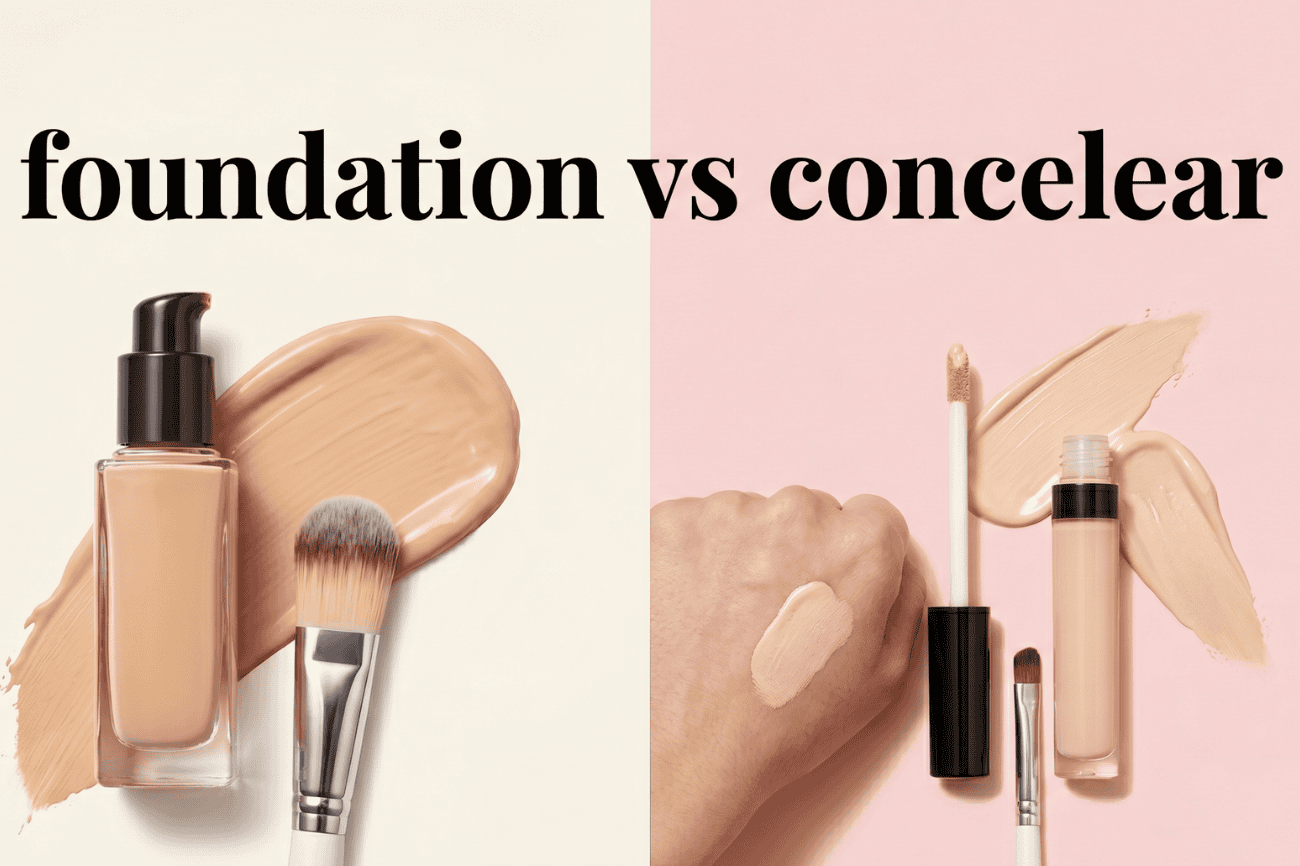
Decoding the Canvas: Foundation vs Concealer
Achieving a flawless, natural complexion requires an understanding of how different cosmetic formulations interact with the skin. Two of the most fundamental products in anymakeuproutine are foundation and concealer. While they may appear to serve the same purpose, they are formulated differently to target distinct skin concerns.
This guide breaks down the science, sensory profiles, and application techniques of both products to help you optimize your daily beauty routine.
Understanding Foundation: The Uniform Base
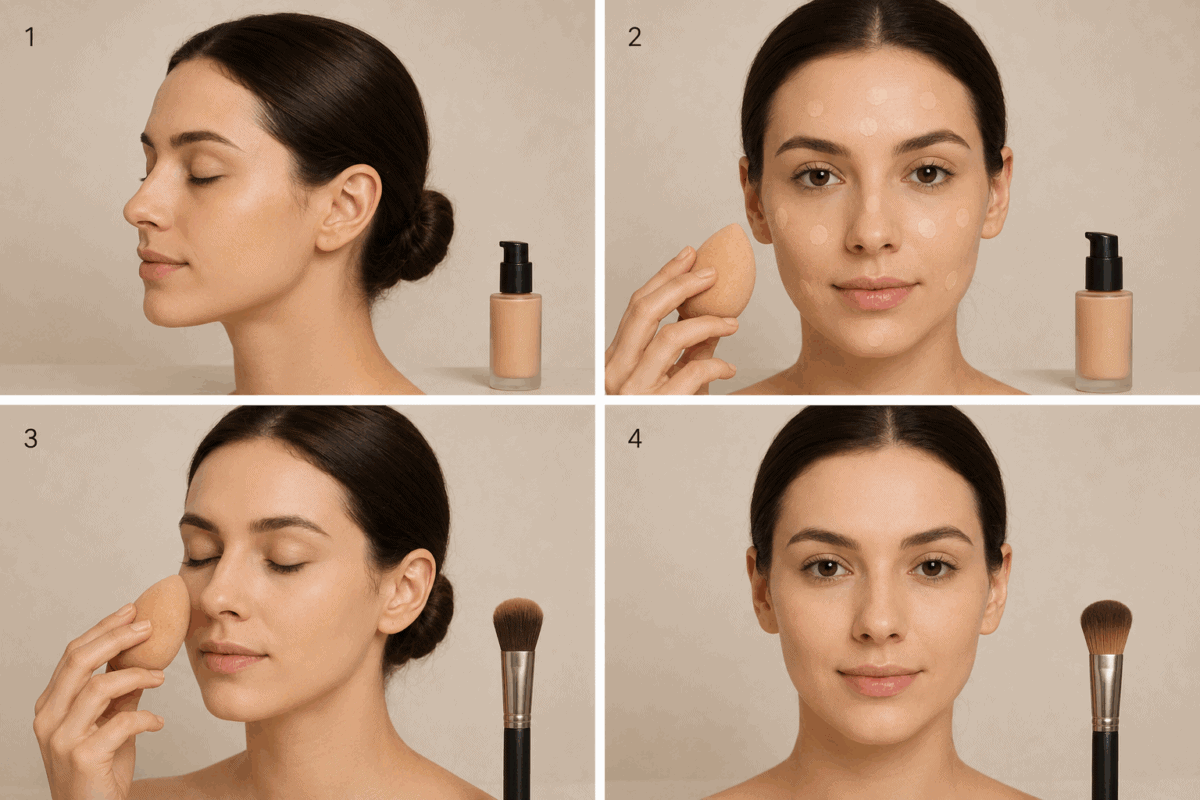
The primary objective of a foundation is to unify the skin tone across the entire face. It minimizes mild redness, diffuses minor imperfections, and creates a homogenous canvas for the rest of your cosmetic applications.
Pigment Density and Formulation
From a technical standpoint, foundations feature a lower pigment concentration compared to concealers. A standard liquid or cream foundation typically contains a pigment volume concentration of 10% to 20% .The remaining percentage consists of water, silicones, emollients, and skincare active ingredients designed to spread easily across large surface areas. This structural balance ensures the product can be sheer, medium, or buildable without overloading the skin barrier.
The Sensory Profile of Foundation
Texture: Fluid, velvety, or satin-smooth. It glides effortlessly across the epidermis without resistance.
Weight: Weightless to light. It forms a breathable, flexible film that moves naturally with facial expressions.
Emotion: Serene and balanced. It provides the comforting reassurance of a healthy, even complexion without feeling restrictive.
Our Testing Observations: Our tests show that when a fluid foundation is buffed into clean skin using a damp sponge, it mimics the natural texture of the stratum corneum while reducing visible surface discoloration by up to 80%.
Understanding Concealer: The Targeted Corrector
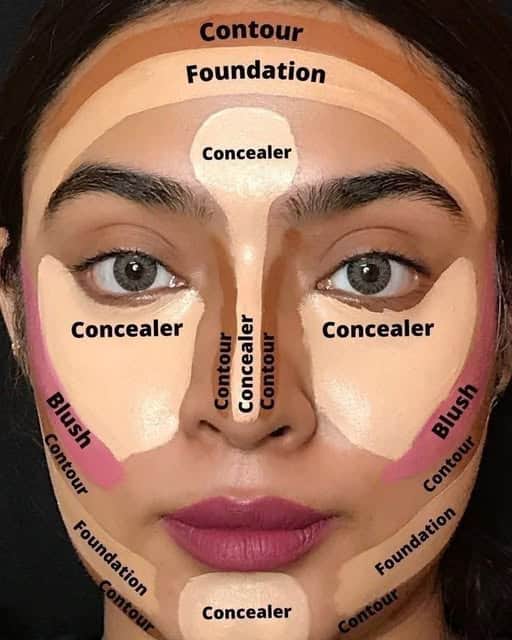
Concealer is a highly concentrated, localized treatment designed to camouflage specific, stubborn imperfections that foundation cannot fully obscure. This includes deep dark circles, post-inflammatory hyperpigmentation, active blemishes, and broken capillaries.
Pigment Density and Spot Coverage
Concealers require a significantly higher pigment concentration to achieve opacity in small areas. The pigment volume concentration in a quality concealer ranges from 25% to 40%. Because of this dense formulation, a very small amount of product is required to neutralize discoloration. It contains fewer volatile oils and a higher ratio of texturizers and binding agents to ensure the product adheres firmly to a single spot.
The Sensory Profile of Concealer
- Texture: Dense, creamy, or paste-like. It possesses a high viscosity that remains exactly where it is placed.
- Weight: Medium to heavy. It feels substantial upon application, providing an immediate physical barrier over imperfections.
- Emotion: Confident and secure. It delivers a sense of relief by completely hiding areas of personal insecurity, such as pronounced blemishes or fatigue.
Direct Comparison: The Coverage Matrix
To understand how these products differ in execution, we can evaluate them through their primary technical performance metrics.
| Performance Metric | Foundation | Concealer |
| Pigment Concentration | Low to Medium (10-20%) | High (25-40%) |
| Application Area | Entire face and upper neck | Localized spots and under-eye area |
| Primary Function | Evening skin tone, smoothing texture | Camouflaging severe discoloration, blemishes |
| Viscosity / Thickness | Low (fluid, light cream) | High (dense liquid, cream, stick) |
| Finish Options | Matte, satin, dewy, radiant | Matte, satin, radiant |
How to Apply Foundation and Concealer for a Seamless Finish
To prevent your makeup from sliding, creasing, or becoming cakey throughout the day, follow this professional step-by-step application protocol.
Step 1: Skin Preparation
Always apply your cosmetics to a well-hydrated base. On clean skin, apply a targeted moisturizer or primer. Allow the skincare layer to absorb completely for two minutes before introducing color cosmetics. This prevents the products from pilling.
Step 2: The Foundation Base
Always apply your foundation first. Dispense a small amount onto the back of your hand, press it into the center of the face (where redness is usually most prominent), and blend outward toward the hairline and jawline. By applying foundation first, you uniform the skin tone globally, which naturally diffuses many imperfections.
Step 3: Targeted Concealing
Examine your complexion after the foundation is blended. You will notice you require far less concealer than you initially thought. Place a small dot of concealer onto dark under-eye circles or specific blemishes. Use a tapping motion with a ring finger or a small dense brush to blend the edges into the foundation. Do not wipe or drag the product, as this removes the pigment you just placed.
Troubleshooting Common Complexion Mistakes
Creasing Under the Eyes
The skin under the eyes is exceptionally thin and prone to movement. If you apply a heavy, high-pigment concealer too close to the lower lash line, it will settle into fine lines. To fix this, keep the product focused on the inner hollow of the eye where darkness resides, and blend outward. Set the area immediately with a microscopic layer of translucent loose powder.
Cakeyness and Separating
Cakeyness occurs when there is an excess accumulation of product, or when oil-based and water-based formulas are mixed improperly. Ensure your primer, foundation, and concealer share compatible bases (e.g., silicone-based pairs with silicone-based) to maintain structural integrity throughout the day.
Editor’s Picks


Cle De Peau Pore-Refining Mattifying Veil SPF 25 PA++
Original price was: £59,56.£39,14Current price is: £39,14.

Benefit HoneyB Twinkle Golden Honey Highlighter
Original price was: £27,23.£24,25Current price is: £24,25.
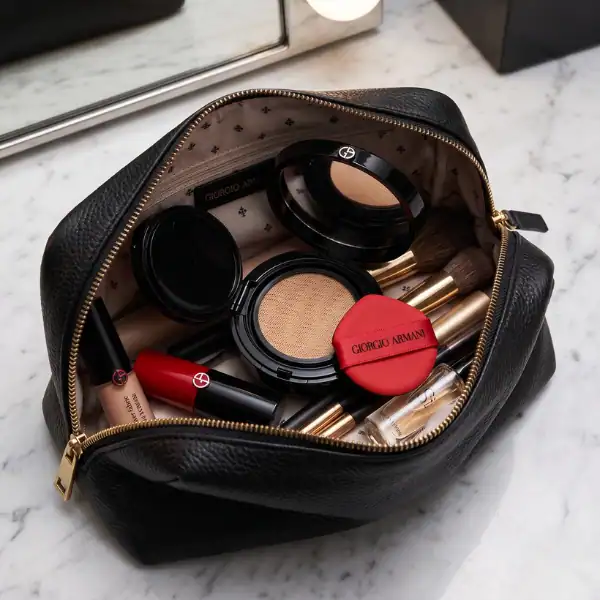
Giorgio Armani My Armani To Go Cushion Refill
Original price was: £48,50.£38,29Current price is: £38,29.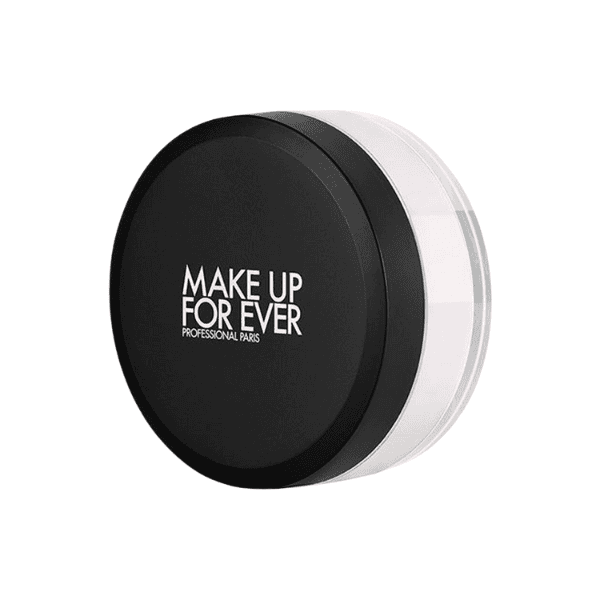

Make Up For Ever HD Skin Setting Powder
Original price was: £35,74.£30,21Current price is: £30,21.Smart Shopper Pro-Tip
When purchasing a concealer for blemishes, match your exact skin tone or foundation shade perfectly. Purchasing a concealer that is too light will highlight the bump of the blemish rather than hiding it. Save the slightly lighter shades exclusively for brightening the deep shadows of the under-eye area.
Suggested Sources
- To find the ideal canvas preparation products, explore our curated selection of [Skincare Primers].
- Discover premium complexion options in our comprehensiveMakeup Collection.
- Keep an eye out for exceptional values on luxury beauty items in ourFlash Deals
Frequently Asked Questions
Can I wear concealer without foundation?
Yes. For a natural look, you can spot-conceal only the areas that require coverage (such as dark circles or redness around the nose) directly on moisturized skin, bypassing foundation entirely.
Should I apply concealer before or after foundation?
Concealer should almost always be applied after foundation. Applying foundation first creates an even base, meaning you will need to use significantly less concealer, preventing a heavy appearance.
How do I stop my concealer from turning grey?
If a concealer looks grey on dark circles or hyperpigmentation, it means the pigment concentration is not strong enough to counteract the undertone. Use a color corrector (peach or orange) before applying your concealer to neutralize the blue or purple tones.
What is the best tool for applying foundation?
A damp cosmetic sponge provides the most seamless, skin-like texture and sheer-to-medium coverage. For a fuller coverage finish, a dense buffing brush works best to pack the pigment onto the skin.
How do I know if my foundation is water-based or silicone-based?
Check the ingredient list on the back of the packaging. If silicones like cyclopentasiloxane or dimethicone appear within the first five ingredients, it is a silicone-based formula. If they are absent, it is primarily water-based.